Concrete has not historically been cast as the hero of environmental narratives. The reputation is not entirely unearned — cement production is energy-intensive, and the calcination process releases CO₂ during manufacturing. Nobody’s pretending otherwise.
What that story typically omits is what happens next.
From the moment a concrete masonry unit leaves production and hits open air, it begins pulling carbon dioxide back out of the atmosphere — permanently. This isn’t a marketing offset or a carbon credit accounting maneuver. It is a chemical reaction built into the material itself, and it runs for the entire service life of the building. And beyond.
For architects, developers, and owners navigating increasingly demanding sustainability standards, understanding sequestration reframes the CMU conversation considerably.
Stored Vs. Sequestered – The Distinction That Matters
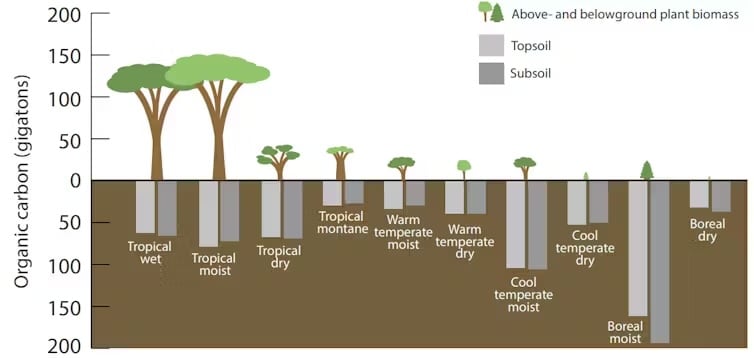
Carbon storage is carbon held in a material at a given moment. Held doesn’t mean permanent. A forest stores carbon efficiently while it stands; logging, milling, and transport releases a substantial portion of that back into the atmosphere. The material becomes a borrower rather than a vault.
Carbon sequestration is carbon permanently removed from the atmospheric cycle — locked in a form that won’t release under normal conditions. For CMU, that means carbon chemically bonded into the block matrix through concrete carbonation. It stays bound unless the material is heated above 1,200°F.
The distinction matters for lifecycle carbon accounting, and for whether a sustainability claim holds up over time.
The Chemistry – The Short Version
The same calcium chemistry that makes cement production carbon-intensive is exactly what gives CMU its sequestration capacity. During manufacturing, limestone is heated and releases CO₂ — that’s the calcination reaction at the core of cement’s emissions footprint. Over time, that reaction runs in reverse: Carbonation is where calcium compounds in hardened concrete react with atmospheric CO₂ and form calcium carbonate — the same limestone mineral it started as. The carbon isn’t stored temporarily. It’s mineralized.
What The Numbers Actually Show
In 2020, CMHA undertook the first systematic study of sequestration rates in dry-cast CMU, measuring nine sets of block sourced from producers across North America. The results — presented at the 2022 ASTM Masonry Symposium and incorporated into CMHA’s Environmental Product Declaration — documented a rate that surprised even people who expected good news.
At 28 days post-production, before a block has been installed in a wall, CMU had already sequestered 21% of its calcination carbon emissions. By year two, that figure reaches 49%. Compare that to wet-cast concrete, which sequesters less than 1% at 28 days and under 3% at two years. The difference isn’t marginal — it’s a different material behavior, driven by the interconnected pore network that dry-cast manufacturing produces. CO₂ penetrates the full matrix, not just the face.
Sequestration doesn’t stop at two years. It continues across the building’s service life.
How CMU Compares to Framed Construction Over Time
At the point a building opens its doors, CMU structures carry embodied carbon figures closer to wood-frame assemblies than to other concrete systems — a counterintuitive result that reflects both CMU’s lower cement content and the sequestration already underway before the block leaves the plant. By year two, a CMU wall reaches rough carbon parity with comparable framed assemblies. By year twenty, it has crossed over — lower embodied carbon than the framed alternative, and still improving. Wood-frame construction has no equivalent mechanism. The carbon stored in lumber depletes over time. It doesn’t compound.
ORCO CMU compounds that advantage further. Less cement means a lower production footprint from the start; the porous dry-cast structure ensures sequestration efficiency stays high relative to what was emitted. A building material that doesn’t rot, warp, or require replacement cycles never restarts its embodied carbon clock. The math improves every year the building stands.
Where Sequestration Occurs
Exposed masonry maximizes sequestration — direct air contact across the full block face lets carbonation run at its highest rate. Protected applications (below-grade, interior partitions, veneers) still sequester, at reduced rates. For projects where CMU isn’t the primary structural material, foundations, stair cores, parking structures, and perimeter walls all represent meaningful integration points.
If exposed block isn’t the aesthetic direction, CMU veneers offer a practical middle ground — the sequestration properties of masonry with the finish flexibility to meet design intent.
The Bottom Line
Carbon sequestration isn’t a new feature of CMU — it’s a material property that has been running quietly in masonry construction for as long as concrete block has existed. What’s new is the ability to quantify it, document it, and put it in a project’s sustainability case.
For professionals whose work is increasingly evaluated against whole-lifecycle carbon metrics, that’s worth understanding in some detail. The detail is in the research. The short version is: the block is still working long after the ribbon cutting.
Sources:
CMHA CMU-FAQ-022-24: Do Manufactured Concrete Products Sequester CO₂? (revised 2024)
Walloch, C. et al., “Conceptual Test Protocols for Measuring Carbon Sequestration of Manufactured Dry-Cast Concrete Products,” ASTM Masonry Symposium, 2022
CMHA Industry Average Environmental Product Declaration for Concrete Masonry Units (v5, 2024)